




Introduction
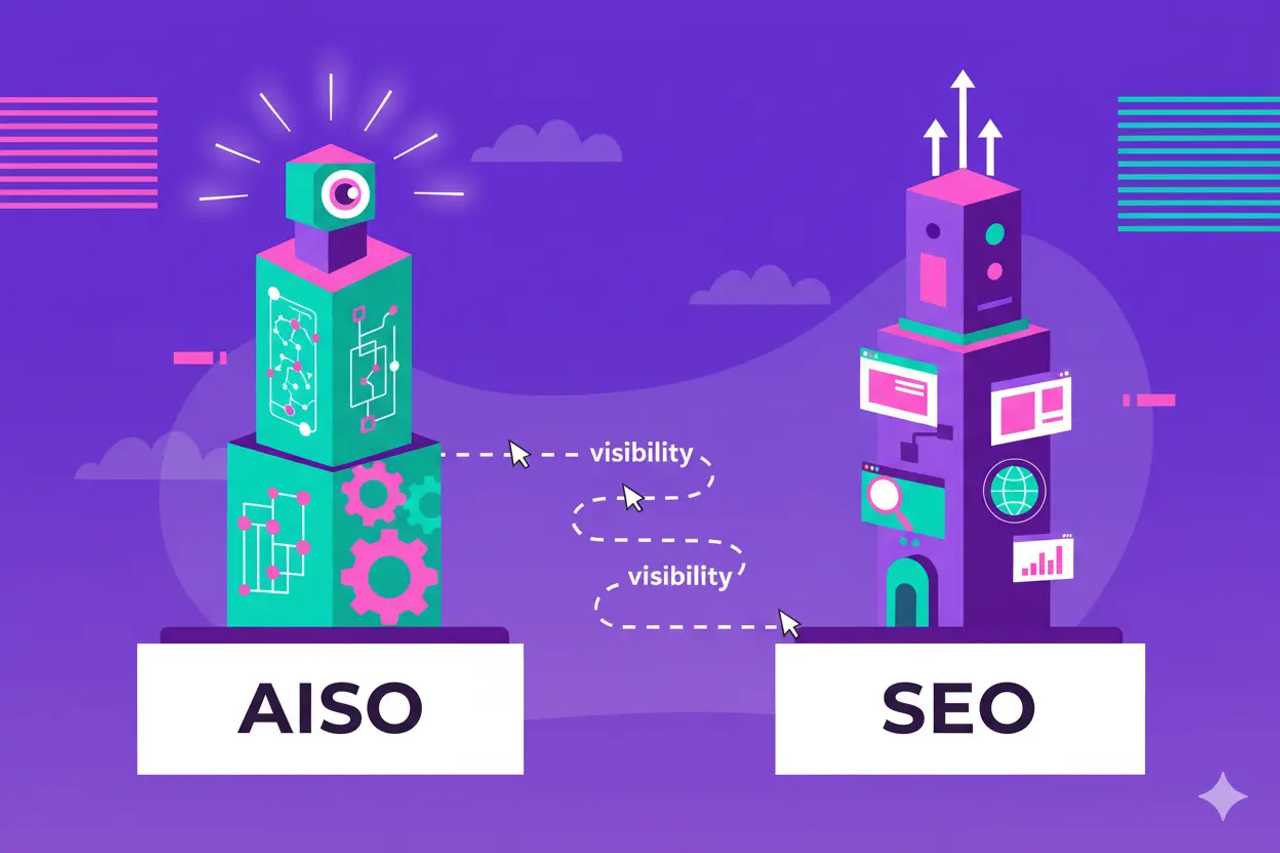
You want your brand to appear when people ask questions in AI assistants and in classic search. Here is the direct answer. You need both AISO and SEO. SEO keeps your site fast, crawlable, and eligible for rankings in organic results. AISO makes your answers extractable, cited, and trusted inside AI Overviews, AI Mode, Bing Copilot, and chat tools. Together they raise your share of voice across search and chat. Google explains how AI features select and cite sources, including AI Overviews and AI Mode, in its site owner guide. See the official overview for how these features work and what helps inclusion. https://developers.google.com/search/docs/appearance/ai-features
In this article you will learn clear definitions, a practical decision tree, technical setup for AI crawlers, content patterns that get cited, a measurement model for AI visibility, and a governance plan that fits EU privacy rules. You will also see examples you can reuse and a simple way to start now. This matters because buyers trust answers that appear in AI summaries and in the first organic results. If your brand is missing in those places, your competitors get the click and the conversation.
AISO vs SEO vs AEO vs GEO
AISO stands for AI Search Optimization. It is the practice of earning inclusion and citations inside AI led experiences such as AI Overviews, AI Mode, and chat tools. SEO stands for Search Engine Optimization. It improves your visibility in traditional organic search results. AEO stands for Answer Engine Optimization. GEO stands for Generative Engine Optimization. You can treat AEO and GEO as helpful mindsets inside AISO. They focus on answer clarity and generation quality while SEO provides the technical and content foundation.
What each approach optimizes
| Approach | Primary target surface | Main success metric | Core tactics |
|---|---|---|---|
| SEO | Classic organic results and featured snippets | Rankings and organic traffic with conversions | Crawlability, fast pages, strong information architecture, quality content, internal links |
| AISO | AI Overviews, AI Mode, Bing Copilot, chat tools | Citations, links, and passages used in answers | Answer first content, clean sections, tables and lists, schema, entity clarity, bot access policy |
| AEO | Answer engines and conversational UX | Direct answer quality for named questions | Clear headings that mirror questions, short answers followed by detail, Q and A blocks |
| GEO | Generative systems that draft summaries | Trustworthy passages that are easy to summarize | Consistent structure, source hygiene, section level semantics, up to date content |
See the official help on AI Overviews to understand selection and linking behavior. https://support.google.com/websearch/answer/14901683
Decision tree you can use
- If your site has crawl issues, fix those first. That is SEO work.
- If your articles lack a clear direct answer at the top, add it. That is AEO inside AISO.
- If AI assistants skip your brand, review your schema, headings, and section clarity. That is AISO.
- If privacy or legal rules limit exposure, set an AI crawler policy and log access. That is AISO with governance.
- If your pages rank but do not convert, improve relevance and offer clarity. That is SEO and content.
Link to deeper strategy notes inside our Definitions and Strategy cluster. [/cluster/definitions-strategy]
Technical foundations for AISO
Search and chat systems read HTML. They prefer content that renders without heavy client side code. Use server side rendering for key pages. Keep your document object model clean and stable so extractors can find headings and lists. Use simple anchor IDs for deep links. Avoid lazy loading that hides key text.
Create a clear AI crawler policy. Document which bots you allow and why. OpenAI lists its crawlers and how to control access with robots rules. https://platform.openai.com/docs/bots You can also read a current view of crawler patterns from Cloudflare. https://blog.cloudflare.com/from-googlebot-to-gptbot-whos-crawling-your-site-in-2025
Add schema where it helps machine understanding. Start with Organization on your home page. Add FAQPage and QAPage to question driven pages. Add HowTo on process guides. Use Speakable on news or guides that benefit from text to speech. See Google Search Central documentation for FAQPage, QAPage, and Speakable, plus the schema property on schema dot org. https://developers.google.com/search/docs/appearance/structured-data/faqpage https://developers.google.com/search/docs/appearance/structured-data/qapage https://developers.google.com/search/docs/appearance/structured-data/speakable https://schema.org/speakable
Govern access with EU first thinking. If you allow reputable AI crawlers, monitor logs and keep an allow list. If you deny access, state your reasons and review quarterly. Legal and communications teams should approve the policy. Some publishers choose to block training crawlers while allowing search feature crawlers. Google explains how AI features work from a site owner view. https://developers.google.com/search/docs/appearance/ai-features
Link to our technical deep dive. [/cluster/technical-aiso]
Content patterns that win in answer engines
Write answer first. Open with a two sentence summary that cleanly answers the question. Follow with short paragraphs, then a scannable set of steps or a small table. Use questions as H2 and H3 headings. Keep paragraphs under four lines. Keep sentences crisp. This structure makes your content easy to quote and easy to cite.
Use a consistent question set to map user intent. For each core topic, add a section that answers the top five questions people ask. Mark that block with FAQPage when the guidance fits Google policy. See the FAQPage guide for details and limits. https://developers.google.com/search/docs/appearance/structured-data/faqpage
Tables help. When you compare plans or steps, present a simple table. Include one clear recommendation. For example.
| Step | What to do | Why it helps |
|---|---|---|
| Define the primary question | Write a two sentence direct answer at the top of the page | AI systems can quote your answer cleanly |
| Add schema | Apply FAQPage, QAPage, HowTo where relevant | Structured data supports machine understanding |
| Clean up headings | Make H2 and H3 reflect real questions | Improves extractability and snippet capture |
| Add examples | Show a real tool or screen | Builds trust and reduces ambiguity |
| Refresh quarterly | Update dates and screenshots | Signals freshness and improves quality |
Link to our content pattern library. [/cluster/content-patterns]
Measurement and KPIs for AI visibility
You need a measurement loop for AI surfaces. Track four areas.
- Presence in AI Overviews and AI Mode on Google. Use a stable prompt set. Record if your brand link appears inside the generated block. See the Google site owner guide for how AI features work. https://developers.google.com/search/docs/appearance/ai-features
- Presence inside Bing Copilot and related generative answers. Microsoft documents how generative answers work inside Copilot Studio and Bing based nodes. https://learn.microsoft.com/en-us/microsoft-copilot-studio/nlu-generative-answers-bing https://learn.microsoft.com/en-us/microsoft-copilot-studio/nlu-boost-node
- Mentions and links in popular assistants and aggregators. Save transcripts from chat tools and record the sources they cite.
- Assisted traffic and conversions. Build landing pages that collect traffic coming from AI summaries and test the uplift from small content changes.
Create a share of voice report. For each entity and topic, track the percent of prompts where your brand appears as a cited source. Add a confidence label. Use a simple scorecard so leaders can see changes over time. Review monthly.
Link to our measurement and KPIs hub. [/cluster/measurement-kpis]
EEAT and trust for AI selection
AI systems favor sources with clear authorship, organizational identity, and source hygiene. Show who wrote the page. Show credentials on author pages. Explain how you review and update content. Use Organization schema. Link to your editorial policy. Keep a visible change log for important pages. Avoid thin content. Remove dated advice. Update examples and screenshots.
You can improve entity clarity by linking to stable references like your company profile on LinkedIn or a trusted directory. Use consistent names for products and people across languages. Add a short about section on complex pages that explains who you are and why you know the topic.
Link to our EEAT best practice guide. [/cluster/eeat-trust]
Multilingual and EU compliance
If you operate in Portugal, Spain, or across the EU, align your AISO plan with privacy and consent rules. Decide which AI crawlers to allow. Control sensitive data exposure. Document legal bases for data use. Pair this with a strong localization plan.
For multilingual content, implement hreflang. Keep entity names consistent across languages. Disambiguate brands and places that share names. Provide translated examples and avoid machine only translations for expert pages. Maintain one source of truth for product names and people. Review country level differences in regulations and accepted terminology.
Link to our Multilingual and EU compliance playbook. [/cluster/multilingual-eu]
Workflow and governance
You need a simple way to run AISO work at scale. Here is a weekly loop you can adopt.
- Pick two topics and extract the top five questions from your support tickets and sales calls.
- Draft an answer first page. Add schema that matches the content.
- Publish and interlink to relevant service and product pages.
- Run your prompt set and record any new AI citations or appearances.
- Update the page with one clear improvement and one visual example.
- Review logs and adjust the AI crawler allow list if needed.
Document who approves AI crawler access. Legal, security, and communications should sign off. Keep an audit log of changes. Train editors on structured data basics. Store a checklist inside your content management system.
Link to our AISO workflow checklist. [/cluster/workflow-governance]
Case snapshots you can learn from
SaaS. A mid market tool wrote a clear answer first page for the search term feature parity. The team added QAPage for common questions and linked to a transparent change log. Within eight weeks, the page started to appear as a cited source in AI summaries for parity questions. The sales team used the page in outreach. Trial sign ups increased.
Tourism. A regional destination rewrote its city guide pages with small tables, transit details, and safety notes. The team added Speakable to short segments that answer top questions for first time visitors. The guide began to appear in AI Overviews for what to do this weekend style queries during peak season. Visitors spent more time on site and saved the guide for later.
Ecommerce. A brand created a fit and sizing hub. The team used a short table of measurements, a two sentence fit summary, and a Q and A section. The hub earned a featured snippet and started to show in AI Overviews for size questions. Returns dropped and reviews improved.
Link to our growing case library. [/cluster/cases-playbooks]
Tools and stack that help this work
Use tools you already know. Search Console shows coverage and structured data issues. Bing Webmaster Tools helps you understand performance on Microsoft surfaces. Log files reveal how bots access your site. Your analytics suite shows assisted conversions and helps you test message changes.
Use AI assistants in a controlled way. Build a stable prompt set. Run it weekly. Record where your brand appears. Keep screen captures with the date. Copilot Studio and related docs show how generative answers use sources. https://learn.microsoft.com/en-us/microsoft-copilot-studio/nlu-generative-answers-bing
For structured data, follow the official documentation. Google documents FAQPage, QAPage, and Speakable. The schema property page for Speakable explains selection. https://developers.google.com/search/docs/appearance/structured-data/faqpage https://developers.google.com/search/docs/appearance/structured-data/qapage https://developers.google.com/search/docs/appearance/structured-data/speakable https://schema.org/speakable
For AI crawlers, monitor the OpenAI bot docs and vendor statements. Decide what to allow. Review the Cloudflare overview to understand common patterns in 2025. https://platform.openai.com/docs/bots https://blog.cloudflare.com/from-googlebot-to-gptbot-whos-crawling-your-site-in-2025
Service section. How AISO Hub can help
You can start with a focused program. We offer four services that match the stages above.
- AISO Audit. We review your content, schema, logs, and AI visibility. You receive a clear scorecard and a ninety day plan.
- AISO Foundation. We fix crawl basics, set your AI crawler policy, and ship a set of answer first templates.
- AISO Optimize. We rebuild high value pages with answer first structure, tables, schema, and internal links. We include Portuguese and Spanish guidance when relevant.
- AISO Monitor. We run your prompt set, track AI citations and share of voice, and recommend monthly improvements.
If you want this program, send a note to our team and tell us your top three topics. We will respond with a plan and a start date.
Conclusion
You need both SEO and AISO to win in 2025. SEO gives you a healthy site and durable rankings. AISO makes your best answers easy to extract and safe to cite across AI surfaces. Start with one topic and ship a direct answer page with schema and a small table. Set an AI crawler policy. Build a prompt set. Measure AI citations and share of voice. Review and improve each week.
If you want a faster path, we can help. AISO Hub can run an audit, lay the foundation, optimize your key pages, and monitor your AI visibility. Use the service section to pick the starting point that fits your team. Then link to the cluster guides inside this article when you want deeper tactics and examples. You control your visibility. This plan helps you take it.